
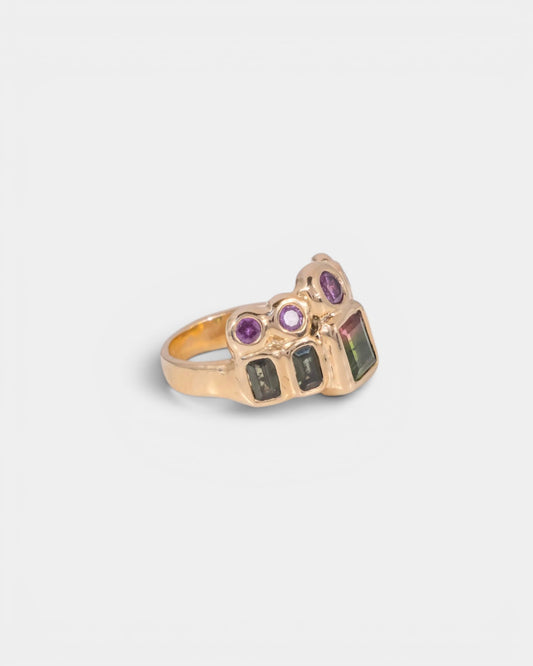

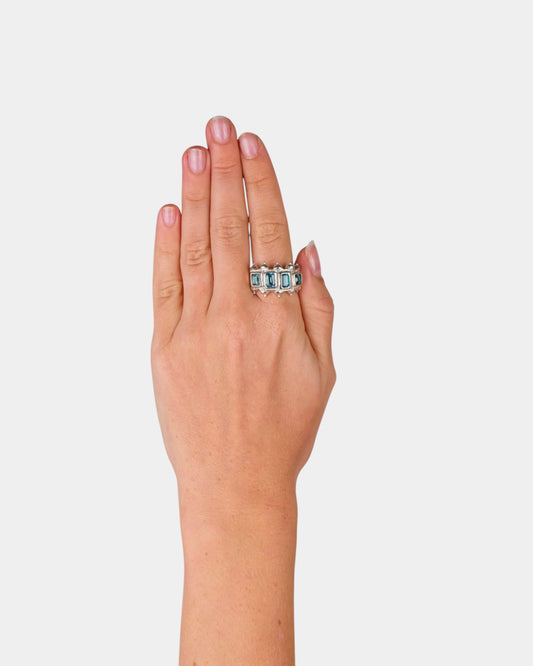


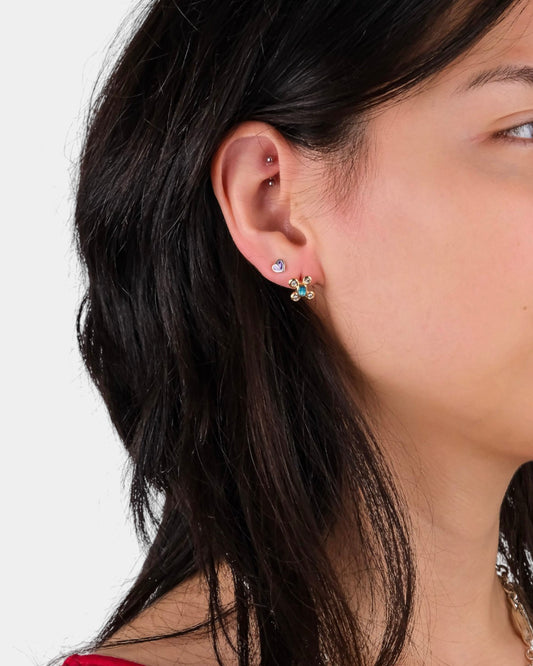

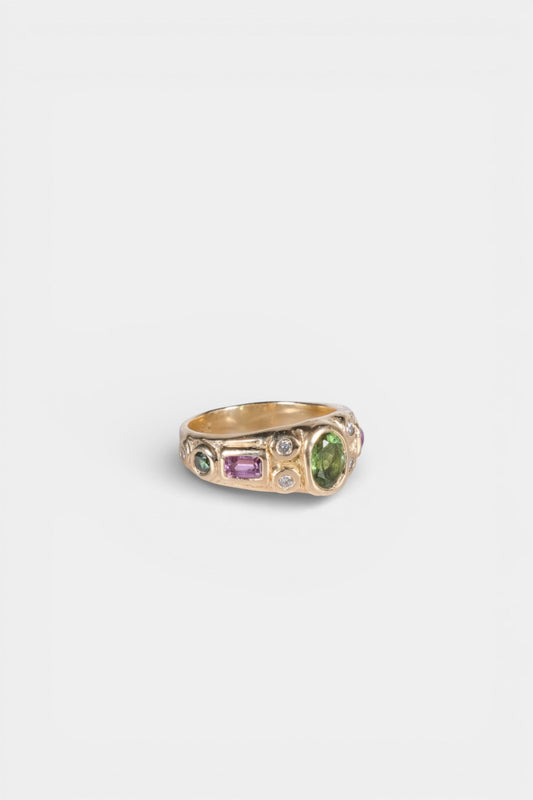

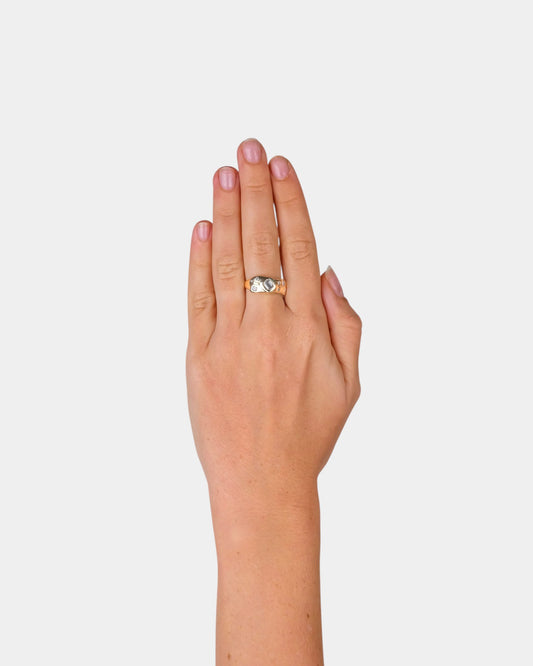

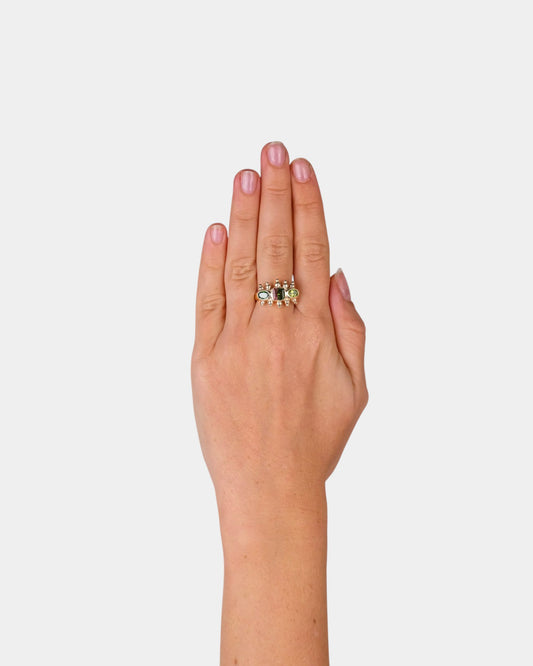
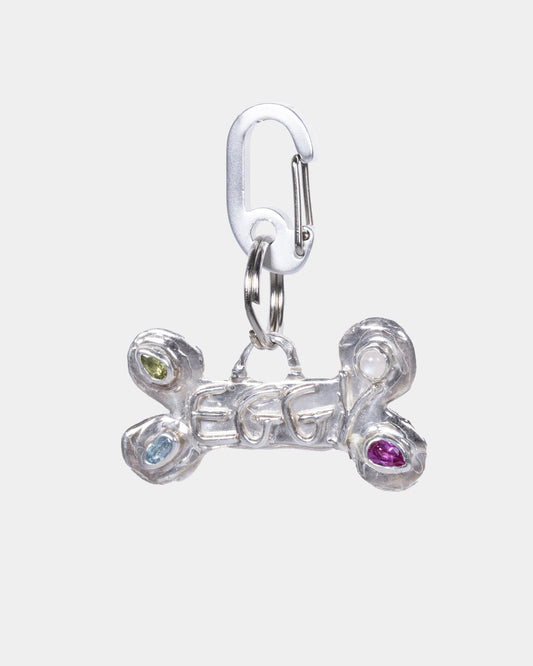
No Millie Savage piece is complete without at least one; a pretty, shiny, sparkly gemstone.
But how much do you know about gems? If you've ever been asked about the stones in your jewellery and your answer was something along the lines of "uh, I don't know" then this introductory guide is exactly what you need to patch the holes in your knowledge.
WHAT IS A GEMSTONE?
We won't go deep into the science, but gemstones are a result of naturally occurring minerals or rocks that have been cut, shaped, and polished for use in jewellery and decorative accents.
We use a mix of natural, lab-grown, and man-made gems sourced from reputable miners and manufacturers from around the world.

HARDNESS MATTERS
How soft or hard a stone is will determine how you should care for it - a soft stone will be more fragile and prone to scratching vs. a harder stone that can hold up to the roughness of everyday wear.
Gemstones are measured based on the MOHS Hardness Scale, with 10 being the hardest and 1 being the softest. Where a stone sits on the MOHS scale can influence how a stone is cut and set, so it's a good idea to refer to this scale when jewellery shopping so you can choose the right gem for your needs.
| MOHS | HARDEST |
|---|---|
| 10 | Diamond |
| 9 | Ruby, Sapphire |
| 8 | Topaz |
| 7.5-8 | Spinel, Aquamarine |
| 7.8 | Emerald, Amethyst |
| 7 | Quartz, Peridot, Tourmaline, Citrine, Garnet |
| 6-6.5 | Tanzanite |
| 6 | Moonstone |
| 5-6 | Opal, Turquoise |
| 5 | Lapis Lazuli |
| 3 | Coral |
| 2.5-4.5 | Pearl |
| 2-2.5 | Amber |
THE FOUR C'S
The Four C's are the fundamentals of understanding diamonds. If you wanna talk Girl's Best Friend with people, the Four C's will instantly make you sound like a master jeweller. So, what are the Four C's?
Carat - This relates to the gemstone's weight (and often size). A higher carat will usually mean a higher price, but it's not the sole indicator of quality.
Colour - Pretty self-explanatory. Many colours you'll recognise, like the deep emerald green or ruby red, and these can contribute to a stone's value, but not all colours are created equal. Gemstone colour is evaluated on three points: hue, tone, and saturation.
Clarity - When you look into a stone, how much or how little you see is determined by its clarity. Stones with a "flawless" clarity are considered to be at the tippy top of the grading pyramid, while stones with an "inclusion" clarity (a.k.a tiny blemishes or marks) are at the bottom.
Cut - Stones come in a variety of shapes, and this is determined by the cut. Different cuts can affect a stone's ability to refract light, which will in turn affect its sparkle, but each one requires mastery.

THE MOST COMMON & POPULAR CUTS
Gems can be cut into a variety of shapes, and each one has its own appeal. Depending on your personal style you may gravitate towards certain shapes; round and square cut gems can be a great choice for a simple piece of jewellery, but if you have a bolder personality you may like a heart or kite cut.
Here's a quick rundown of each cut:
Round Cut - Does what it says on the tin! This is a round shape, usually with 57-58 facets for optimal sparkle.
Princess Cut - Square or rectangular cut with sharp corners, most often used for diamonds.
Emerald Cut - Not exclusively for emeralds, this cut is rectangular with chopped corners for a really classic look.
Trilliant Cut - A curvy triangular shape, this one is a contemporary cut that's great for centrepiece and accent stones.
Oval Cut - Another self-explanatory one, this cut is similar to the round cut but with an elongated shape.
Cushion Cut - A more vintage cut, this is a square shape with rounded corners and larger facets that maximise lustre.
Pear Cut - This is a combination of two cuts with a recognisable teardrop shape, really popular for drop earrings and pendants.
Shield Cut - Similar to a pear cut but with more edges, this cut makes a stone look sharp and angular.
Marquise Cut - An oval shape but pointier, this cut can make stones look larger and fingers look slimmer.
Kite Cut - Even pointier than a marquise, if you can believe. This cut can typically look like a narrow sliver.
Heart Cut - It's heart-shaped! A more modern shape but no less technically brilliant, this is often chosen for sentimental pieces (for obvious reasons).
Hexagonal Cut - It's a hexagon, duh. Hexagonal cuts have six edges and large facets similar to the emerald cut, giving stones a regal look.

TL;DR - WHAT DO I NEED TO KNOW?
The long-story-short is that gems can be natural or lab-made, come in a heap of colours and shades, cut in loads of different shapes to enhance their features, and measured on a fancy scale of hardness.
Choosing the right stone for you should factor in all of the above. And the best way to get the most out of your gemstones? A Millie Savage custom! Made especially for you with your own stones or gems sourced by our amazing team, a custom jewellery piece will mix your inspiration with Millie's creative genius.
Got more questions? Come in to one of our stores or reach out to customs@milliesavage.com to speak with one of our experts.